The Borrowed Messiah
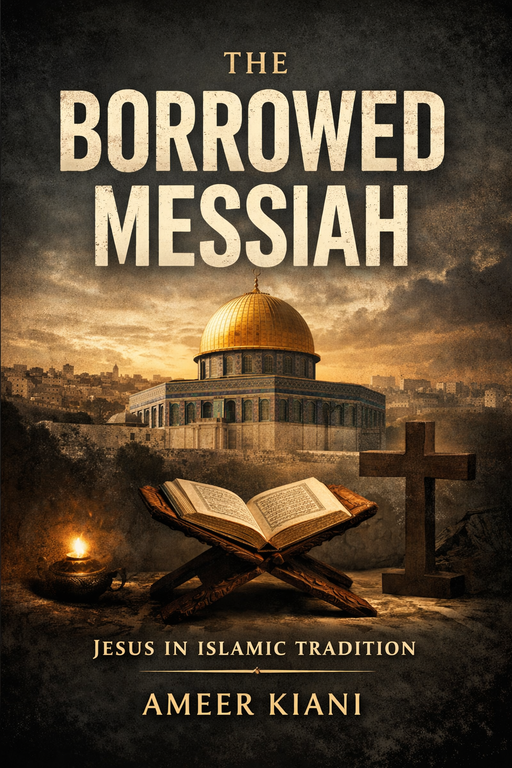
The Jesus Islam Keeps
Muslims often say they love and revere Jesus too. In one sense, that is paradoxically true. Jesus is in the Qur’an, and he is recognized as the Messiah (Qur’an 3:45). His miraculous birth, prophetic status, and important place in sacred history are acknowledged. This is a major talking point Muslims frequently mention, especially when speaking to Christians, as if that alone proves some deep closeness between Islam and Christianity.
My issue is not whether Islam mentions Jesus respectfully, because it does. The distinction I want to make is what kind of Jesus Islam is actually willing to keep.
What seems simpler to me than people make it sound is this: Islam could not afford to ignore Jesus, so it absorbed him. It kept him as prophet, sign, miracle-worker, and messiah, but only after cutting away the parts of him that would challenge Muhammad’s final authority. Anything that made Christ central in Christianity had to be reduced or removed: divinity, sonship, the cross, crucifixion, resurrection, all of it. What remained was a Jesus kept under control, brought inside a system where Muhammad still had to remain final.
Why the Asymmetry Matters
The asymmetry matters more than people admit. Christianity does not need Muhammad to complete its story. Islam does need Christ to complete its own. Christians can reject Muhammad without Christianity falling apart, but Islam cannot simply throw out Jesus without weakening its claim to continuity, revelation, and Abrahamic legitimacy. One religion can say no to the later prophet and remain intact. The other cannot say no to the earlier messiah without weakening itself.
Christianity came first. By the time Islam appeared, Christ was already at the center of an established religious civilization. He was not some minor figure Muhammad could casually dismiss. Jesus already carried massive religious and civilizational weight. If Islam wanted to present itself as the final correction of earlier revelation, it had to account for him. It had to explain him, appropriate him, and place him inside its own story. But the Christ of Christianity could not be left intact. A Christ who is divine, crucified, risen, and central to salvation does not confirm Muhammad. He competes with him. In Christianity, Christ is the Word of God, not just another messenger in a prophetic chain that later Islamic tradition extends into the hundreds of thousands. So Islam handled the problem the only way it really could. It kept Jesus, but only after changing what he was allowed to mean.
Islam takes Jesus’s prestige, his prophetic importance, his miraculous aura, even his title as Messiah, but it does not leave him as the Christ Christians actually worship. That is why I call Christ Islam’s borrowed messiah. In the Qur’an, Jesus is still honored, but he is also reduced. Surah 4:171 calls him a messenger and rejects both the Trinity and divine sonship. So yes, Jesus remains in Islam, but only on terms that keep him below Muhammad and within a system that already rejects core Christian claims.
Restoration or Revision?
To be fair, Muslims would not say Islam borrows or diminishes Jesus. They would say it restores the real Jesus after Christian corruption, returns him to pure monotheism, and honors him as a prophet instead of turning him into God. I understand that internal logic. My problem is that this “restoration” comes later, overrules the earlier Christian witness, and strips away the very things that made Christ central to Christianity. That still looks to me more like revision than recovery.
Muslims will often say they love Jesus more than Christians do because they respect him as a prophet and reject what they see as later corruption. But to Christians, Jesus is not just one prophet in a long sequence starting from Adam. He is not simply a respected messenger preparing the way for someone else. He is the center. In the Gospel of John, Christ says, “I am the way, and the truth, and the life” (John 14:6). That is not how a subordinate figure speaks. That is not the language of a prophet whose job is to stay safely inside another man’s final revelation. So when Islam removes divinity, sonship, crucifixion, resurrection, and the cross, it is not “correcting” Christianity in some neutral way. It is rebuilding Jesus into a form that no longer threatens Islamic finality.
The Cross Is Not Optional
The cross is not some accidental Christian ornament. It is the central symbol of Christianity because it is tied to sacrifice, redemption, suffering, love, and victory through what looks like defeat. Christ in Christianity is not just a miracle-worker or moral teacher. He is the one who suffers, dies, rises, and becomes the center around which the whole religion is organized.
The crucifixion was not some late Christian invention that showed up centuries later. It belongs to the earliest Christian witness. Paul was already proclaiming Christ’s death, burial, and resurrection very early (1 Corinthians 15:3–4). Whatever people want to argue theologically, the basic point is simple enough: the communities closest to the time of Jesus placed the cross at the center. Islam arrives centuries later and says, actually, they did not crucify him. It is not the preservation of the earliest memory. It is a later correction imposed on an earlier witness. The Qur’an says in Surah 4:157 that they did not kill him, nor did they crucify him. That is one of the clearest places where Islam does not merely reinterpret Jesus. It removes the event that made him central to Christianity. The earlier communities proclaimed the cross. Islam denies it later while still claiming to honor Christ. That gets at exactly what I mean by the borrowed messiah. Jesus is kept, but the event that made him central is taken away. Once that happens, what is left is no longer the Christ of Christianity.
Reverence Without Centrality
This is why I do not think Islam really follows Jesus in any serious Christian sense. It reveres him verbally and symbolically, but structurally it contains him.
Even the Jesus of Islamic end-times tradition remains subordinated to an Islamic order. He returns among Muslims, with an imam already among them, and breaks the cross, his own symbol, rather than affirming it, as in Sahih al-Bukhari 3448 and the related tradition in Sahih Muslim.
Christianity can say no to Muhammad and remain fully itself, because Christ stays central, the Gospel stays intact, and the cross does not lose its meaning. Islam cannot do the same with Jesus. If Christ disappeared from Islam altogether, the whole claim to prophetic continuity would weaken immediately. Jesus is not optional to Islam. He is necessary to the structure Islam is trying to build. Christians do not need Muhammad to understand Christ. Muslims do need Jesus to situate Muhammad.
I know many Muslims are sincere when they say they love Jesus. I do not deny or minimize that. But sincerity does not erase the structure. A figure this powerful could not simply be thrown away, so he was absorbed. Islam allows reverence for Jesus, but not theological sovereignty. He can be honored, defended, even awaited, but he cannot become the center of the religion. That place is already taken.
The Claim Needs More Pressure
So when Muslims say they follow Christ too, I think the claim needs much more pressure than it usually gets. Do they follow him in the sense Christians mean? Do they organize faith around his life, death, resurrection, and saving role? Do they submit to him as central, or do they only honor him as one important figure whose limits have already been decided in advance?
The Borrowed Messiah
To me, Islam does not follow Christ so much as borrow him. It uses his prestige, keeps his name, preserves his symbolic power, and then places him beneath Muhammad. It cannot ignore him, but it also cannot let him remain what Christianity says he is. It is closer to symbolic appropriation than shared faith.
Sources
Qur’an 3:45
Qur’an 4:171
Qur’an 4:157
John 14:6
1 Corinthians 15:3–4
Sahih al-Bukhari 3448
Sahih Muslim on the son of Mary descending among you and your imam being among you