
How The Manosphere Poisons Young Men’s Minds
Many young men are taught that unless they become rich, dominant, and desired, they are nothing. The manosphere does not heal that wound. It monetizes it, deepens it, and turns ordinary rejection into bitterness, paranoia, and despair.

Why Stability Comes Before Meaning
The miracle may not be exceptionalism, but actually stability. It may seem dull and unglamorous to others, but it gives a real chance and hope. A lot of people want meaning before stability and feeling special before consistency, but that is not how life usually works.

What Astrology Can — and Cannot — Explain
What made astrology powerful for me was not just that it felt accurate. It was that it made me feel significant. This essay is about the seduction of cosmic explanation, the psychological cost of living through a chart, and why I would rather build a life than inherit one from the stars.

The Shift to Evidence-Based Reality
As I’ve learned more about research rigor and confirmation bias, I’ve started noticing which frameworks actually explain reality and which ones mainly feel convincing. What follows is a reflection on why astrology stopped holding up for me, and why sleep, routine, structure, and psychology turned out to matter far more.
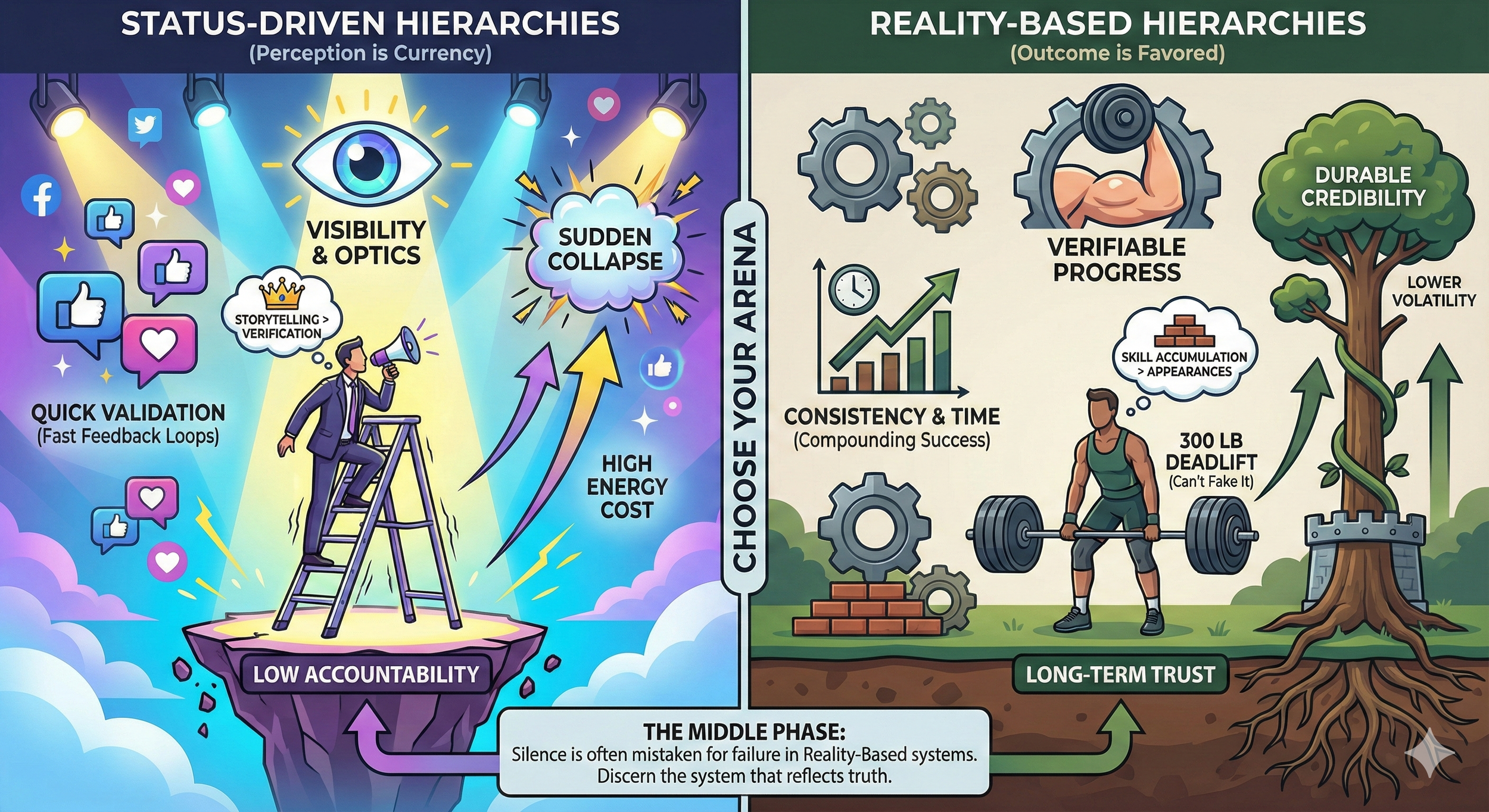
Why You Feel "Behind" (It’s Not You, It’s Your Hierarchy)
Why You Feel “Behind” (It’s Not You, It’s Your Hierarchy)
A lot of people assume they lack confidence, status, or charisma.
In my experience, many of them are simply being evaluated by the wrong system.
Not all hierarchies measure the same thing. There is a confusion about confidence, visibility, and success. People feel behind despite their effort and discipline. It is simply a mismatch of environments, not a character deficiency.
In status-driven hierarchies, perception is currency and visibility is prioritized. Attention equals value. Fast feedback creates the illusion of momentum, but it is rarely durable or meaningful long-term.
In reality-based hierarchies, outcome is favored over appearance. Consistency is rewarded. Time and skill accumulation matter. Progress is verifiable, feedback is inescapable, and trust compounds slowly.
Most frustration comes from using the wrong scoreboard.

The Market of Masks
Modern dating often feels like a mirage built on performance. People curate masks and present them like products. Most interactions start to feel like choosing a costume instead of meeting the person underneath. Identity shifts toward what gets likes, matches, and approval, and the real self gets pushed aside. Stepping away from that system helped me understand what I actually value. I prefer honesty, presence, and emotional awareness over the fast and curated nature of digital connection. This essay is my reflection on how masks shape our interactions and why authenticity still matters.

The Psychology of the Body: How Physical Training Shapes Identity and Confidence
Many people enjoy the gym or outdoor running and sports. As a fitness enthusiast for almost two decades, I have realized that the body is more than aesthetics or muscles. Working out is not only physically beneficial but also psychologically. Evidence shows that consistent exercise stabilizes the mood. Stress, emotion, and identity are affected by our bodies as containers, and fitness is a simple way to regulate the nervous system.